
The Hidden Impact of Skipping Hearing Tests
Hearing loss doesn’t usually happen all at once. More often, it develops gradually—so subtly that your brain begins to adjust to a quieter world without you even noticing.
Maybe you’ve started turning the TV up just a little louder, or asking someone to repeat themselves more often than you used to. Because these changes happen slowly over time, they can easily begin to feel like your new normal.
At Castle Rock Ear Associates, we often see patients who have unknowingly adapted over time. You might find yourself relying more on lip reading or choosing quieter environments to avoid the strain of background noise. These adjustments can feel helpful in the moment, but they often delay people from seeking care.
The challenge is that the longer hearing loss goes unaddressed, the less stimulation your brain receives. Over time, this can make it more difficult to adjust to treatment later on. Recognizing the signs early and staying consistent with hearing evaluations can make a meaningful difference in both your hearing and your overall quality of life.
What Gets Lost Before You Realize It
When you skip regular screenings, the first thing you lose is rarely “volume” but rather “clarity.” High-frequency sounds, such as the voices of children or the soft consonants in speech like “s,” “f,” and “th,” are often the first to fade. This leads to a phenomenon where you can hear that someone is speaking, but you cannot quite understand the specific words they are saying.
This lack of clarity significantly increases your listening effort. You may notice that you feel uncharacteristically exhausted after a social gathering or a long work meeting.
This “listening fatigue” occurs because your brain is working overtime to fill in the gaps of missing sound. Eventually, this constant strain can lead to a quiet withdrawal from social situations.
You can rest assured that identifying these hurdles early through in-depth diagnostic evaluations can prevent the gradual isolation that often accompanies unmanaged hearing changes.
What the Research Tells Us About Hearing and Cognition
Recent scientific advancements have shed light on the connection between how you hear and how your brain functions. Researchers have long noted a correlation between untreated hearing loss and an increased risk of cognitive decline.
To investigate this further, the ACHIEVE study looked at whether hearing interventions could actually slow down the progression of cognitive issues in older adults.
While the results across the entire study population were varied, the findings for those at a higher risk of cognitive decline were compelling. For these individuals, proactive hearing interventions showed a clear benefit in supporting brain health.
The key takeaway for you is that hearing care is not just about your ears; it is a supportive pillar for your neurological well-being. By managing your hearing health today, you are potentially providing your brain with the stimulation it needs to remain resilient as you age.
Why Skipping Hearing Tests Can Delay Meaningful Intervention
When hearing isn’t regularly evaluated, changes can go unnoticed and undocumented. Over time, this gradual decline leaves your brain working harder to make sense of sounds with less and less input.
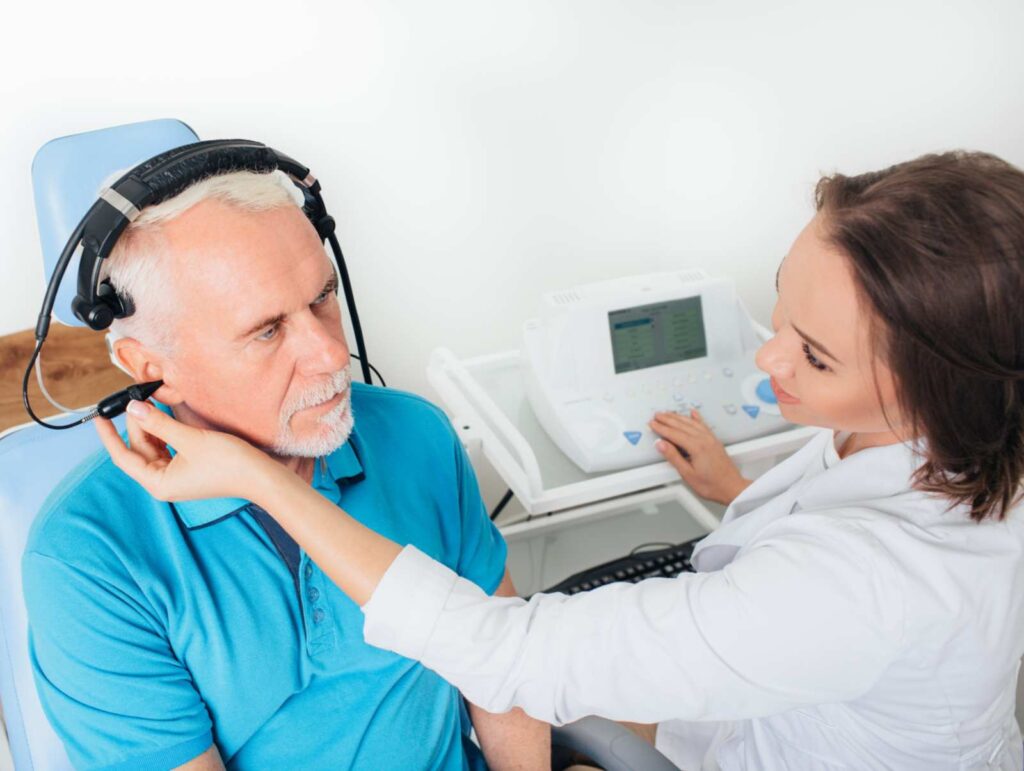
A hearing test does more than determine what you can and can’t hear. It provides insight into how well you understand speech and how your auditory system performs in real-world situations—like conversations in noisy environments.
When these evaluations are skipped, an important opportunity is missed. Early changes in hearing can place added strain on the brain, especially when it comes to processing speech. Identifying this early allows for timely intervention and helps preserve the neural pathways responsible for understanding sound.
At Castle Rock Ear Associates, we take a patient-centered approach focused on early awareness and long-term success. When hearing concerns are addressed sooner rather than later, it’s often easier for patients to adjust to treatment and technology—because the brain is still actively engaged in processing sound.
Why Castle Rock Ear Associates Takes a Proactive Approach
We are dedicated to providing a level of care that goes beyond basic screenings.
At Castle Rock Ear Associates, we utilize benchmark-setting diagnostic standards and the latest clinical equipment to ensure your results are precise and actionable. You benefit from the expertise of our highly qualified clinical experts who are trusted by local physicians and thousands of families throughout the community.
As an independent clinic, we provide you with access to state-of-the-art sound processing devices from all major global brands. This independence ensures that your specific lifestyle needs and hearing profile dictate the solution, rather than a limited inventory.
We focus on your long-term outcomes and sustainable hearing health rather than short-term fixes, ensuring that the care you receive today continues to serve you for years to come. You can rest assured that our team is committed to your success.
Knowledge First; Decisions Second
It is important to remember that a hearing test is not an automatic commitment to wearing hearing aids.
Rather, it is an essential diagnostic step that creates a baseline for your future health. Whether your results show perfect hearing or a slight decline, having this information empowers you to make informed decisions about your hearing health.
Taking a proactive step toward your hearing and cognitive health is one of the best investments you can make for your quality of life. We invite you to experience our unique approach to care firsthand.
By scheduling an appointment to meet our audiology team at Castle Rock Ear Associates, you are choosing clarity, connection, and peace of mind for your future self.
Frequently Asked Questions
If I can still hear most conversations, is there a hidden “cost” to waiting until my hearing gets worse?
Yes. The cost is often neurological and social. When you wait, your brain begins to lose its ability to process complex sounds efficiently, a process called auditory deprivation.
Additionally, the increased mental effort required to decode speech can lead to chronic fatigue and social isolation long before you feel “deaf.” Addressing changes early keeps your brain’s processing centers active and healthy.
Does the ACHIEVE study prove that hearing aids prevent dementia?
The ACHIEVE study suggests that for older adults who are at an increased risk for cognitive decline, hearing intervention can significantly slow down the rate of that decline. While it isn’t a “cure” for dementia, it highlights that hearing health is a modifiable risk factor. By managing your hearing, you are potentially reducing the overall cognitive load on your brain, which is a vital part of a healthy aging strategy.
What is the difference between a quick hearing screening and the evaluations at your clinic?
A basic screening is often a simple “pass or fail” test of volume. Our comprehensive evaluations look at the entire auditory system, including how well you understand speech in noisy environments and the physical health of your ear. This level of detail allows us to create a personalized baseline that tracks your health over time, ensuring that any intervention is perfectly tailored to your unique neural needs.
Sources
The Lancet is a world-leading medical journal that published the ACHIEVE study, detailing the links between hearing intervention and cognitive health in older adults.